
Share this article
What the Protests Are About
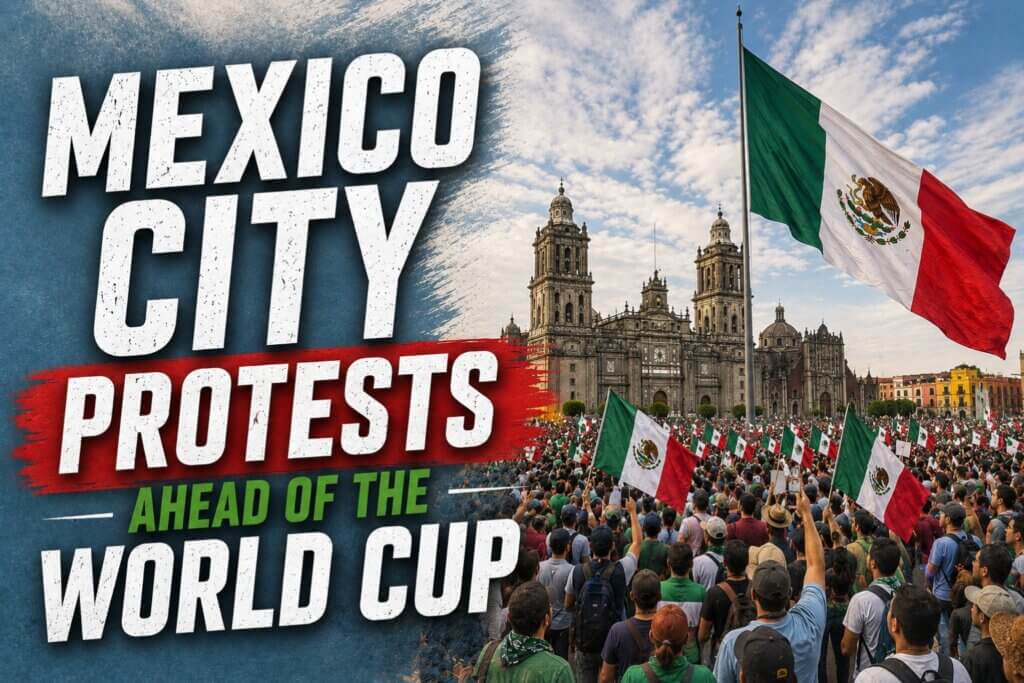
The striking teachers are demanding pension reform and salary increases from the federal government. The union launched a national strike on June 1 and set up a protest camp in the Zócalo, Mexico City’s main square, to pressure the government into negotiations before the World Cup begins.
The timing is deliberate. With the world’s attention on Mexico City, the union sees the tournament as leverage. Negotiations are ongoing. The government has presented an initial pension offer along with a timetable for reform, and while the union rejected that first proposal, both sides remain at the table.
This is a labor dispute between Mexican teachers and their government. It has nothing to do with visitors, the World Cup itself, or safety conditions for travelers.
Where the Protests Are Happening
The protest activity has been concentrated in a few specific areas:
- The Zócalo (Historic Center): The teachers’ encampment sits in the main square, near the FIFA Fan Fest site. The Fan Fest area is barricaded and heavily policed, and it opens as planned on June 11.
- Paseo de la Reforma and Insurgentes: Marches have temporarily blocked these major avenues on several days since June 1, causing heavy traffic.
- Calzada de Tlalpan: Demonstrations near the Estadio Azteca area have slowed traffic on this corridor, which is the main route to the stadium.
If you are staying in Roma Norte, Condesa, or Polanco, the protests are not happening in your neighborhood. The impact for most visitors is traffic, not safety.
The Protests Have Been Peaceful Toward Visitors
There have been no reports of protesters targeting tourists. The demonstrations have stayed concentrated around government buildings and official sites, and tourist neighborhoods, restaurants, museums, and hotels have operated normally throughout the strike.
President Sheinbaum has publicly pledged that the government will not use force against the demonstrators and has promised to guarantee that the World Cup opening takes place peacefully. Nearly 100,000 military, police, and private security personnel are being deployed across Mexico for the tournament, the largest security operation in the country’s World Cup history.
Activists Climb the Estela de Luz Monument
The teachers are not the only group using the World Cup spotlight. Early in the morning on June 9, eighteen activists from organizations including Greenpeace and Amnesty International climbed the Estela de Luz, the 104-meter monument on Paseo de la Reforma, and hung banners calling attention to human rights issues, including Mexico’s more than 133,000 registered missing persons. The banners carried messages like “Justice for the disappeared” and “The world is watching.”
The protest was peaceful from start to finish. There were no arrests, no injuries, and no traffic disruptions. The climbers used proper safety equipment and came down on their own. For visitors, this was a banner protest at a landmark, the kind of demonstration that makes headlines without affecting anyone’s travel plans. The organizers have said they plan to continue their advocacy during the tournament, so similar actions may appear at other landmarks in the coming weeks.
What This Means for the June 11 Opening Match
Several protest marches are planning to converge near Estadio Azteca on June 11, around the 1:00 PM kickoff of Mexico vs. South Africa. The match is going ahead as scheduled, but road traffic to the stadium could be significantly slower than normal.
If you have tickets, leave much earlier than you normally would and take the train or metro rather than a car, since rail lines are not affected by road blockades. The same goes for the FIFA World Cup 2026 Opening Ceremony in Mexico City, which takes place at the stadium before kickoff.
If you do not have tickets, watching from a fan zone or sports bar is the easier option. Our guide to Where to Watch World Cup 2026 in Mexico City covers the best spots across the city.
Practical Tips for Getting Around This Week
- Use the metro or train instead of cars on protest days. Road blockades do not affect the rail network.
- Heading to the airport? Metro Line 5 (Terminal Aérea station) avoids the roads entirely.
- Build in extra time for any trip that crosses Reforma, Insurgentes, or the Tlalpan corridor.
- Going to the Fan Fest? The Zócalo Fan Fest opens June 11 as planned. The site is barricaded and heavily policed, so expect security screening and lines at the entrances.
- Check local news in the morning before heading out. March routes are usually announced in advance, and the US Embassy posts demonstration alerts for Mexico City.
Should You Change Your Travel Plans?
No. The protests are a domestic political dispute, the government has committed to a peaceful resolution, and the tournament is proceeding as planned. The practical impact on visitors is traffic delays on specific avenues, which are easy to plan around.
The US State Department has not changed its guidance for Mexico City because of the protests. The capital remains at Level 2, Exercise Increased Caution, the same level it held before the strike began and the same level as many popular destinations around the world.
For a full breakdown of how to navigate the city safely, read our complete guide: Is Mexico City Safe? And if you are still sorting out accommodation for the tournament, check out Where to stay in Mexico City for the best neighborhoods to base yourself.
US Travel Advisory for Mexico During the World Cup: What It Actually Says
The US State Department reissued its Mexico travel advisory on May 29 with new guidance for World Cup travelers, and the US Embassy followed with its own safety messages for fans in the days before the opening match. The headlines made it sound like a new warning against visiting Mexico. It is not. Mexico remains at Level 2, Exercise Increased Caution, the same level it held before the tournament, and the World Cup opened at Estadio Azteca on June 11 as planned. Here is what the advisory actually says and what it means for your trip.
What the Advisory Actually Says
Mexico as a whole sits at Level 2, Exercise Increased Caution, due to terrorism, crime, and kidnapping. That is the same level as many popular destinations around the world, and it does not advise against travel. It means stay aware, stick to well-traveled areas, and use common sense, the same advice that applies in any large city.
The State Department rates Mexico state by state, from Level 1 (exercise normal precautions) to Level 4 (do not travel). The May 29 update did not raise any levels because of the World Cup. What it added was tournament-specific guidance, directing American fans to follow updates from the US Embassy in Mexico during the matches.
None of the six Level 4 states hosts a World Cup match.
Advisory Levels for the Three Host Cities
Mexico City: Level 2, Exercise Increased Caution. The advisory notes that both violent and non-violent crime occur throughout the capital and recommends extra caution at night outside of tourist areas. This is the same level Mexico City held long before the tournament. The city hosts five matches, including the opener, and you can see the full list in our guide to 2026 World Cup Matches in Mexico.
Monterrey: Level 2, Exercise Increased Caution. The city itself carries the same rating as Mexico City. The advisory’s main caution for Nuevo León is about driving: if you are coming overland from Texas, stick to daylight hours on the highways between the border and Monterrey.
Guadalajara: Level 3, Reconsider Travel. Jalisco is the only host state with a Level 3 rating. The rating reflects cartel-related violence in parts of the state earlier this year, after a February military operation against a cartel leader triggered roadblocks and unrest in the region. The Mexican government has since ramped up security across the Guadalajara metro area, and both President Claudia Sheinbaum and FIFA have committed to safe matches at Estadio Akron. The tourist core and stadium zone are heavily secured during the tournament.
What the US Embassy Is Telling World Cup Fans
The US Embassy in Mexico City runs a dedicated World Cup page for American visitors and published a message to fans on June 9. The practical points matter more than the headlines:
- Enroll in STEP. The Smart Traveler Enrollment Program sends you security updates and demonstration alerts, and it lets the Embassy contact you in an emergency. The Embassy also runs a WhatsApp channel called “U.S. Citizens in Mexico.”
- Bring a passport book, not just a card. A passport book is required for all air travel into Mexico and for domestic flights within Mexico, including for children and infants. It must be valid for your entire stay.
- Traveling with kids? A child not traveling with both parents needs a notarized authorization letter from the absent parent. Without it, children may not be allowed to board a plane in Mexico.
- Check your bags before you fly. Weapons and ammunition are serious crimes in Mexico, all drugs including medical marijuana are illegal, and so are e-cigarettes and vaping liquids. Penalties apply even if you packed them by accident.
- Skip street taxis. Use Uber, Cabify, hotel taxis, or official taxi stands. Limit the cash you carry and avoid isolated ATMs.
- Sort out insurance. Medicare, Medicaid, and most US health plans do not cover care in Mexico, and hospitals can hold patients until the bill is paid. Travel medical insurance is cheap by comparison.
- Buy tickets only through FIFA. Reselling tickets is illegal in Mexico, and FIFA’s official marketplace is the only authorized way to buy resale tickets.
Opening Week in Mexico City
The Embassy issued a separate alert on June 10 covering opening day: the government closed schools and urged telework on June 11 to cut traffic, and several protest marches were announced around the city. The advice for visitors was simple. Monitor local news, expect traffic, and do not join political demonstrations.
The protests are a domestic labor dispute, not a safety threat to visitors, and we covered them in detail in our article on the Mexico City protests ahead of the World Cup. If you are skipping the stadium crowds, our guide to Where to Watch World Cup 2026 in Mexico City covers the best fan zones and sports bars.
Security During the Tournament
Mexico has deployed nearly 100,000 military, police, and private security personnel for the World Cup, the largest security operation in the country’s history of hosting the tournament. The plan covers all three host cities and includes thousands of vehicles, aircraft, and anti-drone systems around the stadiums. For fans, the visible result is checkpoints, bag screening, and a heavy police presence around stadiums, fan zones, and tourist areas.
Should the Advisory Change Your Plans?
No. The advisory level did not change because of the World Cup, Mexico City and Monterrey carry the same Level 2 rating as before, and the tournament is proceeding as planned with millions of visitors expected. The State Department’s guidance boils down to preparation, not avoidance: enroll in STEP, carry the right documents, use registered transportation, and stay out of demonstrations.
If Guadalajara is on your itinerary, take the Level 3 rating seriously in the sense the advisory intends. Fly in rather than drive, stay in the tourist core, and avoid traveling around the state at night.
For a full breakdown of safety in the capital, read our complete guide: Is Mexico City Safe? And if you are still booking accommodation for the tournament, check out Where to stay in Mexico City for the best neighborhoods to base yourself.
Resources
FIFA World Cup 2026 page, US Embassy and Consulates in Mexico
Protests in Mexico City capitalize on World Cup celebrations to pressure government, ABC News
Mexico City teacher strike threatens to disrupt 2026 World Cup kick-off, Latin America Reports
Demonstrations cause disruptions across Mexico City ahead of FIFA World Cup opening, NPR
Activists climb Mexico City monument in human rights protest, Mexico News Daily
Frequently Asked Questions

Never miss what's happening in Mexico City!
Deals, travel tips & news direct to your inbox.